Ceropegia Care Guide
Table of Content
- About
- Light
- Humidity
- Water
- Pests & diseases
- Feed
- Pruning & Propagating
- Soil
- Repotting
- Troubleshooting & Tips
- Toxicity
- Species
- Ceropegia woodii (String of Hearts)
- Ceropegia woodii Variegata (Variegated String of Hearts)
About
Ceropegia is a truly beautiful species of trailing plant that belongs to the family Apocynaceae. Found natively in Australia and Southern Asia but the most impressive species that we have brought into our home are from Africa growing wildly in Zimbabwe, Swaziland, and South Africa.
Classed as evergreen succulents, these plants are perfect for beginners. They are easy to care for and relatively fuss-free while being truly rewarding houseplants. While in the wild the long tendril can reach up to four metres long these fast-growing plants can, on average, still reach an impressive metre and a half as a houseplant, combined with a long life span and good care you can grow these plants to prime specimens that could give a native plant a good run for its money.
While most people fall in love with these plants for their delicate and pretty foliage they can also produce gorgeous blooms of unusual-looking semi-carnivorous flowers. They are often small and dainty, protruding themselves from the vine, topped with an unusual umbrella-like canopy. The flowers are what first caught the eye of Carl Linnaeus who first described this genus way back in 1737.
Light
Ceropegia needs an abundance of bright indirect light to thrive and stay healthy. While some species will tolerate slightly lower light conditions it is always best to keep them in the brightest spot possible. Most species will also appreciate a small amount of direct sunlight, ideally, early morning or late afternoon when the sun’s rays are not so strong, however, they will not tolerate too much exposure and will quickly scorch on hot days if left for too long in full sun.
Humidity
Being the wonderful fuss-free genus of plant that Ceopegia is, all houseplant varieties will comfortably thrive in the average household humidity level (40%). These plants often don’t need any special treatment and are happy to be left to grow and look gorgeous.
Water
It is important to remember that houseplant varieties of Ceropegia tend to be succulents meaning they store water within their leaves making them relatively drought-tolerant. But during the warmer months, these plants will get through their water supply quite quickly and will need to be regularly checked.
It is best to let the soil dry out completely before watering as sitting in continuously damp or moist soil will damage the roots and cause rot. The mistake of watering too soon can often be made, remember water will be stored in the leaves so even after the soil is completely dry the plant will be able to survive by drawing from the water it has stored.
During the winter Ceropegia will lay dormant waiting for warmer climates. During this time water very sparingly as this will be the easiest time to overwater your plant and cause damage to the roots.
Pests & Diseases
It is good practice to regularly check your plants for any signs of aphids, red spider mites, mealybugs, and thrips. By checking regularly, you allow yourself time to prevent a full-blown attack.
The most common pests Ceropegia tend to suffer from are aphids, scale bugs and mealybugs. This will normally occur from a lack of airflow. If you can increase airflow the pests tend to subside but will need to be treated to fully get rid of the issue.
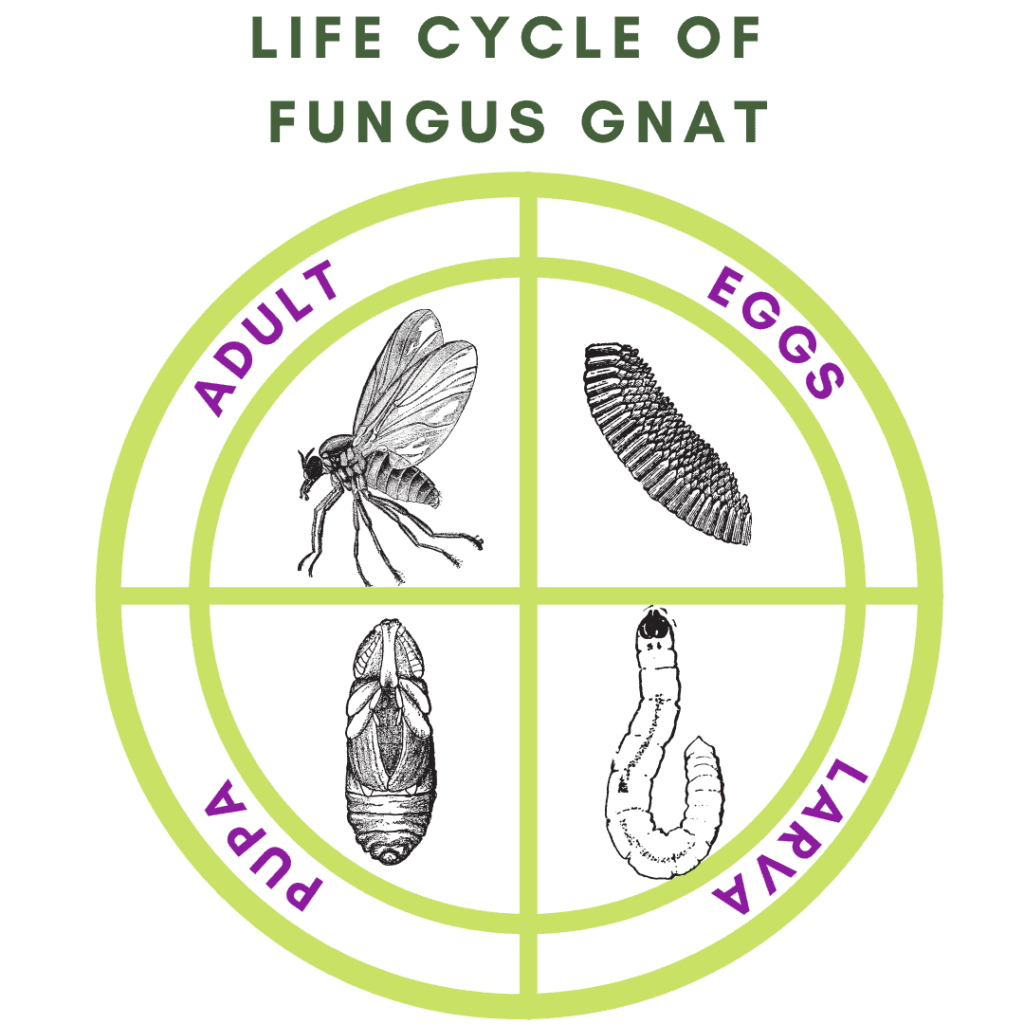
Check our video on homemade pest remedies or head over and read are Fungus Gnat Fact Check and Home Remedies how to guide
Feed
Ceropegia requires very little feeding. While they still require the basic building blocks of nutrients in equal parts, nitrogen-phosphorus-potassium there are normally high enough quantities in their soil to keep them happy. They can be fed bi-monthly or when producing flowers but it’s best to use a liquid feed that can be diluted to half or quarter strength and applied when watering.
Pruning & Propagating
Ceropegia responds well to light pruning. Trimming back their long vining tendrils will encourage new growth that will keep your plant looking bushy and full.
Always use a clean and sterilised pair of scissors or secateurs to trim back!
The easiest and best time to propagate Ceropegia is after it has flowered. After flowering, the plant will produce small round aerial tubers that are jam-packed with growth hormones, when these come into contact with soil they tend to root and start to produce another plant.
When the plant starts to produce these tubers find the closest node and cut it off.
Fill a small pot with cacti and succulent compost and place the tuber on the surface. It is often best to use a small U-shaped pin to firmly hold it down.
Keep the soil moist and in a warm location and usually, within a month or so the plant will begin to root.
Soil
When it comes to soil, Ceropegia is not too fussy. They can tolerate anything from slightly acidic to neutral soil. But being more of a succulent, these plants are best suited to a well-draining potting mix.
The easiest option is to use cacti and succulent compost this should provide adequate drainage and the right amounts of nutrients. Other good potting mixes you could use can be made up of; 3 parts potting soil, 2 parts coarse horticultural sand, and 1.5 parts of perlite.
Repotting
It’s best to repot your Ceropegia only when it’s root bound. But even then these plants can still thrive when root-bound so it is not essential even if it completely fills its pot as long as it is still receiving adequate nutrients from external feed. Depending on the size of the plant, you may find yourself repotting every two to three years.
The pot size only wants to increase by about a third as it’s easy for these plants to drown in pots that are slightly too big.
If you have reached your maximum pot size you will need to top-dress the plant once a year with a fresh layer of soil to replenish the nutrients.
The best time to repot your plant is when spring arrives and the plant is no longer dormant. Outside temperatures will rise and the daylight hours will increase. When this happens your Ceropegia will react quickly to the environmental change and start producing lots of new foliage growth.
You will need to pick a pot with excellent drainage, we don’t want water hanging around the roots.
Next, fill a third of the way up with your cacti and succulent compost and place the root ball of the plant in the centre of the pot.
Fill the pot with the rest of your potting mix and firm down the soil.
When you’ve finished and got your plant back in the perfect spot you can give it a thorough watering to settle the plant into its new pot. Keep a close eye on it for the first couple of weeks and then relax back into your normal watering schedule. Avoid feeding for at least eight weeks as this influx of additional nutrients can cause damage to the root system and make it difficult for the plant to settle into its new environment.
Troubleshooting & Tips
- Yellowing leaves are the first sign of overwatering. Allow the plant to dry out before watering again or move to a warmer spot to speed up the process of drying out.
- Overexposure to sunlight will start to cause leggy growth. The best thing to do is trim back all leggy growth and move to a better location.
- Underexposure to light will often result in leggy growth and faded and curly leaves. Moving the plant to a brighter spot and chopping back the leggy growth should resolve the problem.
- Crisp-to-the-touch leaves are a common problem, this is often due to leaving it too long between watering. This often follows by the plant starting to drop leaves. Check your plant regularly for watering, especially in the warmer months.
- If your plant is producing small leaves this is an early indicator that it needs to be repotted.
Toxicity
There is no need to worry about Ceropegia as it is non-toxic to humans and pets and won’t cause any harm if ingested.
Species
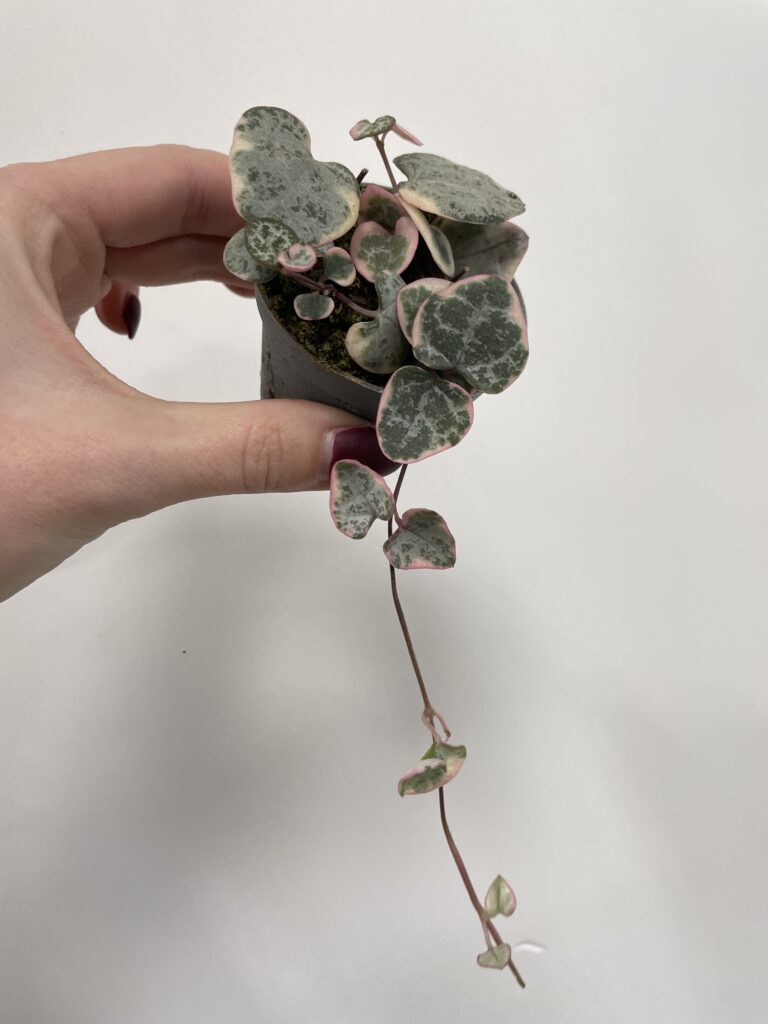
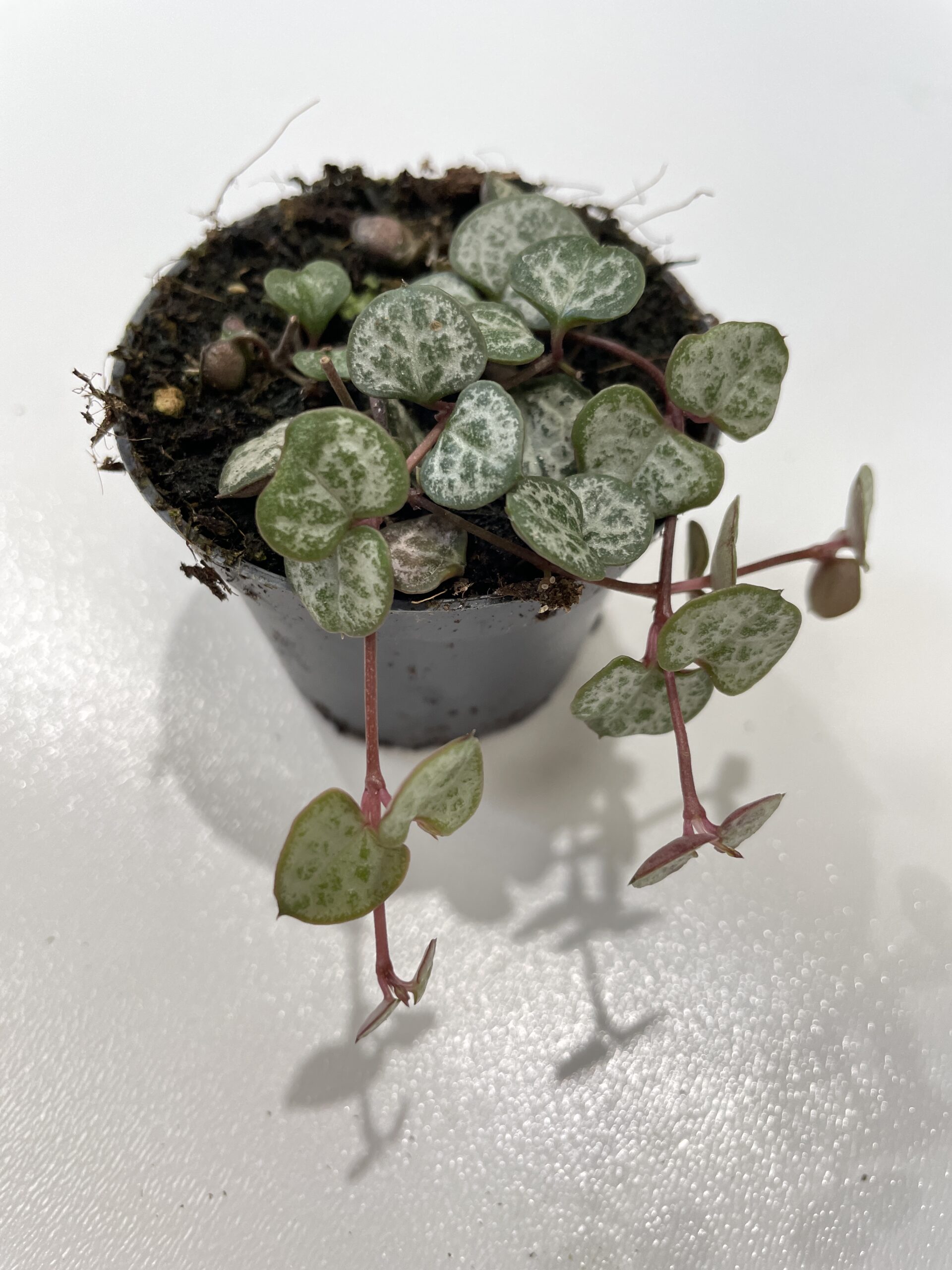
Ceropegia woodii (String of Hearts)
This iconic Ceropegia is a must-have for any plant enthusiast. Producing delicate heart-shaped leaves that cover the long and slender trailing vines. Perfect for most locations around the home, this plant is quick to draw in the eye with the mix of a spotted pattern of light and dark green contrasted beautifully with a long purple/pink underside of the leaf. Also producing intriguing semi-carnivorous flowers when well cared for.
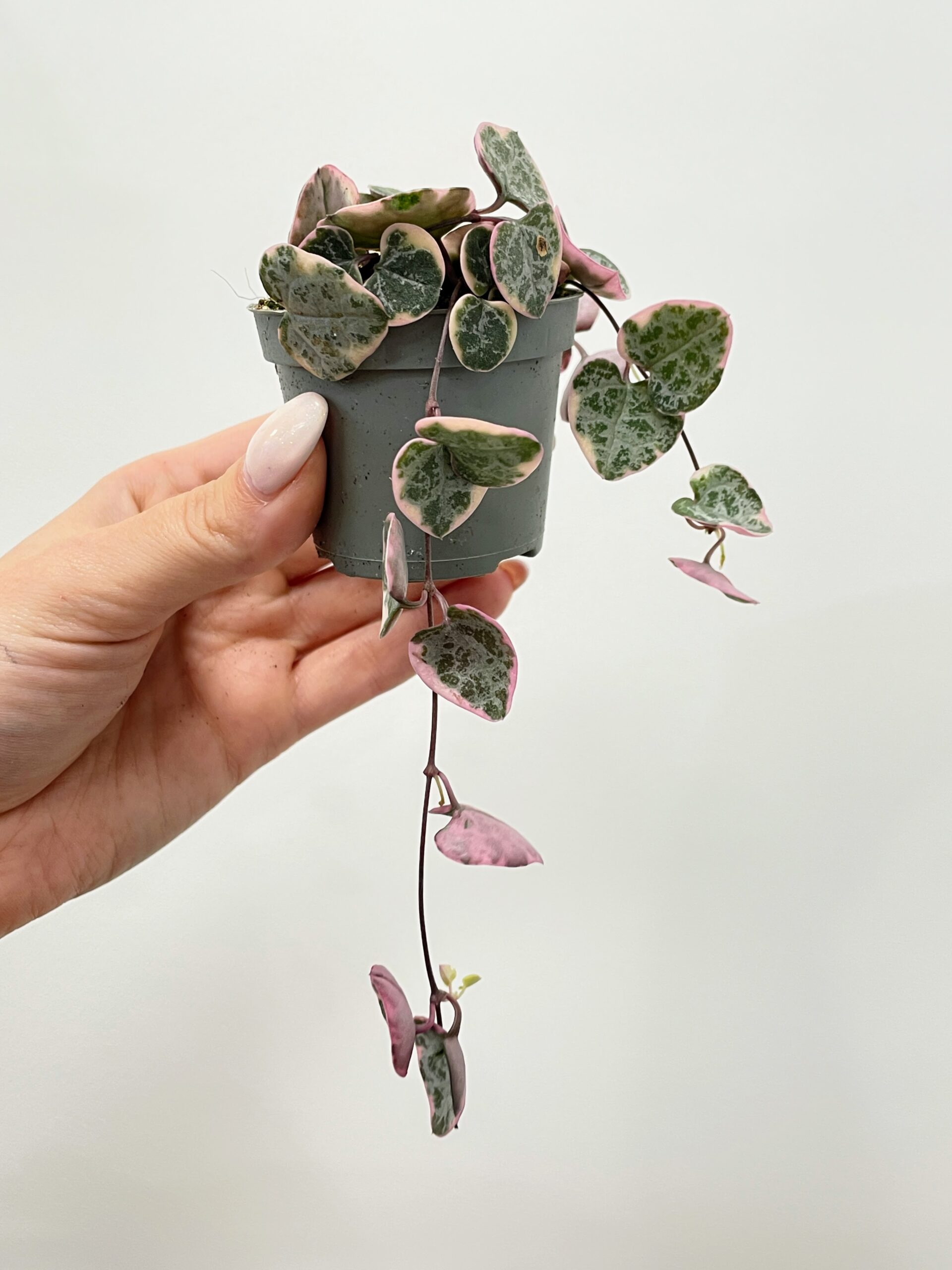
Ceropegia woodii Variegata (Variegated String of Hearts)
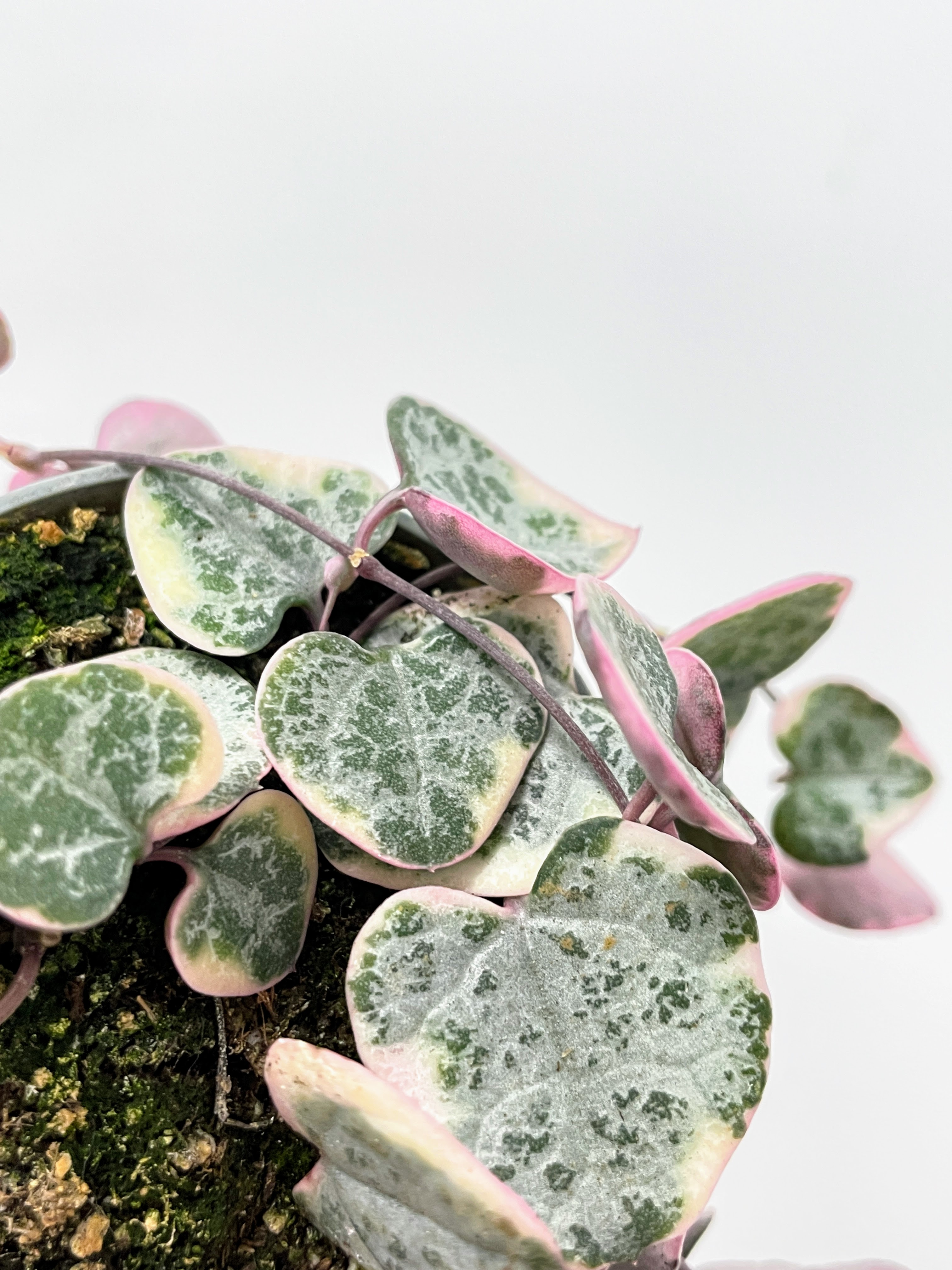
This plant is almost identical to its non-variegated counterpart but with one major gorgeous addition, the variegation. The variegation of this variety makes it really stand out from the crowd, displaying a similar pattern on the leaves but with silver markings and a much darker green leaf contrasted beautifully with cream and pink variegation that draw the edges of the leaves immediately to your attention.
If you enjoyed this guide head over to Articles & Blogs to learn more or check out our YouTube for even more useful information!