Fittonia Care Guide
Table of Content
- About
- Light
- Humidity
- Water
- Soil
- Feed
- Pruning & Propagation
- Repotting
- Pests & Diseases
- Troubleshooting & Tips
- Species
- Fittonia Skeleton Orange
- Fittonia Mosaic White Tiger
- Fittonia Lemon Lime
- Fittonia Mosaic Red
- Fittonia Pink Forest Flame
About
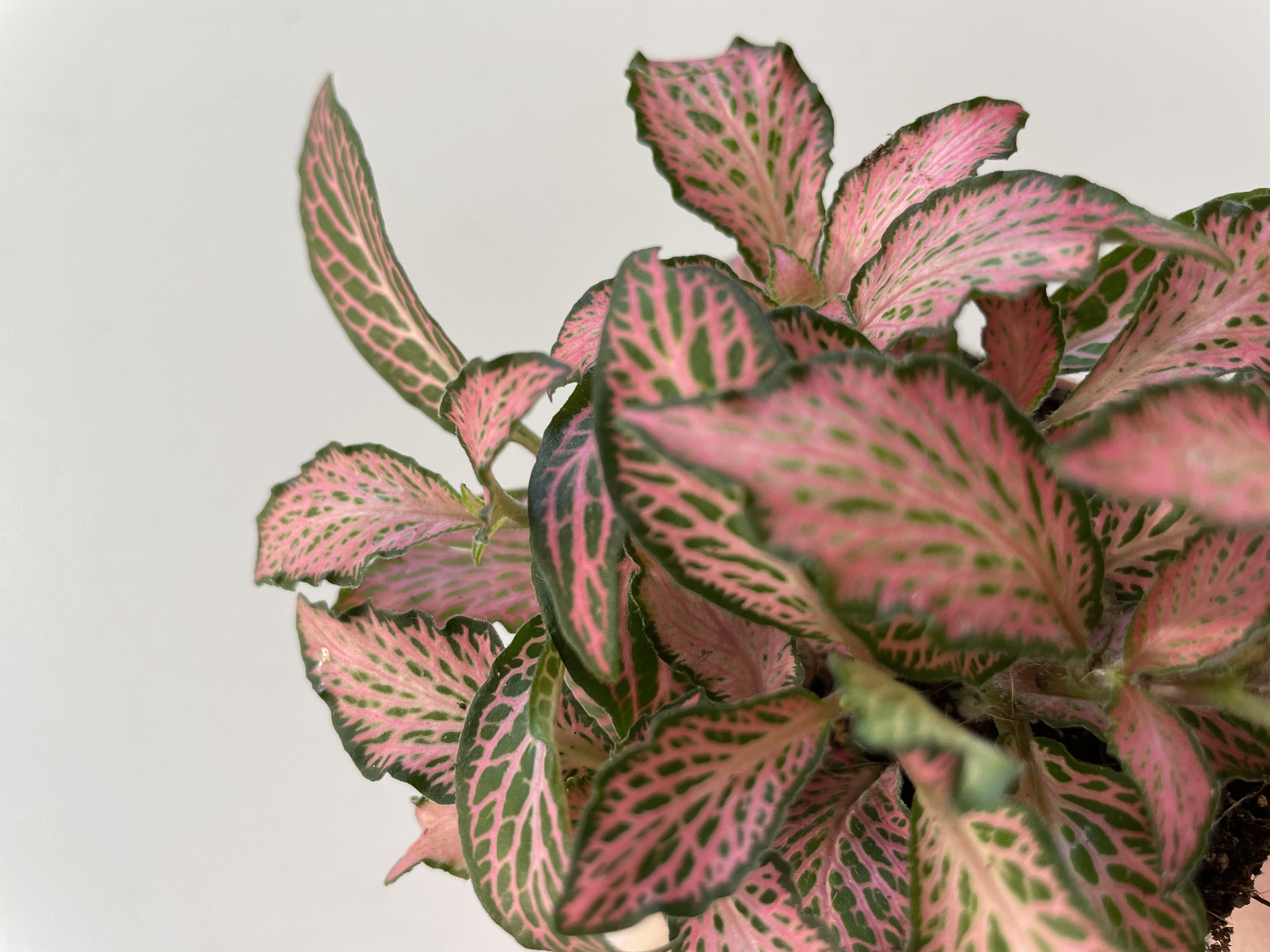
Fittonia are gorgeous little bundles of plant joy! These wonderful small-leafed plants come in a variety of bright and vivid colours often showing off striking patterns on their leaves with their contrasting coloured veins. Sometimes referred to as the Nerve plants or Mosaic Plant, Fittonias are ground-covering, flowering perennials belonging to the Acanthaceae family. Native to tropical rainforests across South America they are often found spreading along the jungle floor in Peru and Brazil.
There are hundreds of different varieties of Fittonia that have been cultivated with an array of colours and leaf sizes. There really is a Fittonia for everyone, these versatile, air-purifying plants are relatively easy to take care of and are fairly forgiving to a touch of neglect. They are quick to grow and easy to propagate and to be honest, are a fun plant to play around and experiment with whether it’s placing them in terrariums, using them to underplant in pots with other house plants or just practising different methods of propagation. Overall these magnificent tropical houseplants are sure to brighten up any room they are placed in and bring a touch of wonder and amazement.
Light
Fittonias are light lovers and much prefer being placed in bright indirect light. The brighter the better as this will help the plant retain its vibrant colours. But always avoid direct sunlight as this will cause scorch and burn the foliage. The bright light will also encourage faster growth and help your Fittonia to fill its pot quickly. The best spot can be behind a thin curtain on a south-facing window sill where the plant receives high amounts of filtered light.
These plants can adapt to shadier and lower light conditions but often they won’t perform to their best abilities and will start slowly producing leggy dull growth. If you don’t have a brighter spot you can move the plant to, regular pruning will help to bush out the plant and keep it on the healthier side.
Humidity
Fittonias are naturally found in the rainforests of South America which makes them lovers of high-humidity environments, the consistently higher the humidity the better these plants respond. The sweet spot for Fittonias is around 55%-70% humidity.
Their high tolerance to humidity makes these plants perfect for locations like terrariums, closed ecospheres, bathrooms and kitchens and anywhere else where humidity levels would be higher than normal.
Fittonias kept in lower humidity areas will have to be regularly misted to keep the plants’ foliage happy and healthy.
Water
Fittonias require regular watering, their thick dense foliage requires a consistent level of moisture to keep it looking at its best. While you don’t want to keep the soil of the plant saturated with water or continually soggy the soil will need to be kept moist and ideally, the soil should never be left to dry out more than 50%.
If you do happen to miss a watering, it may look like the end of the road for your Fittonia but they can bounce back pretty quickly. Fittonia has a dramatic habit of going limp and wilting and looking like they’ve bitten the dust. But a quick soak in undertray and they will soon spring back into life.
Soil
Fittonias prefer well-drained soil that can retain moisture between watering. The ideal soil mix for these plants will be nutrient-rich, allow for good aeration, be slightly acidic (6.3PH-6.6PH), and be free-draining with a decent amount of water retention. While not part of the Arum family they will appreciate an aroid potting mix as this will give them the environment they need to perform well.
Other good potting mixes for Fitonias can be made up of; 1 part shredded bark (orchid bark will do the same job), 1 part vermiculite, 2 parts perlite and 4 parts sphagnum moss. Or just a regular houseplant potting mix enriched with perlite, for this mix it’s best to go for 80% houseplant potting mix and 20% perlite.
Feed
Fittonia like a good feed and like most houseplants, to promote healthy roots, stems, and leaves will need a steady supply of nitrogen, phosphorus, and potassium. The most important thing is nitrogen to keep their colourful leaves looking their best. A good liquid houseplant feed can be applied once every two weeks during the growing season.
Pruning & Propagation
To keep your plant looking full and lush it is always good practice to keep it well trimmed. Cutting away the oldest and most damaged growth on the plant is a great way to encourage new foliage growth and to keep your plant happy.
Fittonias are easy to propagate from cuttings. When trimming back your plant you have two options. If you want your plant to become bushier and dense, prune above the node which would be a leaf cutting. Alternatively, if you prefer prune below the node to take a stem cutting. Both make for good cutting materials.
Simply place your cuttings in a glass of rainwater and wait for up to 2-4 weeks to start seeing signs of new roots. You will need to regularly change the water to avoid algae. Once you have substantial root growth you can place the cutting into a small pot of Aroid mix.
You can also put your cutting straight into a jar with fresh sphagnum moss. This is probably the easiest way to propagate as it involves the least steps. Simply take your cutting at the node, find a jar or pot preferably with no drainage holes, fill it up with fresh moss and nestle your cutting in the centre. Fill up the jar with water so the moss has been evenly watered and then drain out all excess water making sure not to leave any at the bottom of the jar when standing upright. Now keep an eye on your new cutting, checking the moss every couple of days to ensure it hasn’t dried out.
We’ve got all sorts of great moss you can use check them out here!
Repotting
It’s best to re-pot your Fittonia once the roots fill their pot. Depending on the size of the plant, you may find yourself repotting once per year but on average every three years seems to work well. These plants don’t like being pot-bound, they can survive like this but normally their growth rate will slow dramatically and if left for too long will start to show signs of distress.
If you have reached your maximum pot size you will need to top-dress the plant once a year with a fresh layer of soil to replenish the nutrients and think about trimming the roots back to encourage fresh growth and stop it from becoming pot-bound.
The best time to repot your Fittonia is when spring arrives. Outside temperatures will rise and the daylight hours will increase. When this happens your Fittnoia will react quickly to the environmental change and start producing lots of new foliage growth
You will need to pick a pot with good drainage, we don’t want excess water hanging around the roots.
Next, fill a third of the way up with your potting mix and place the root ball of the plant in the centre of the pot.
Fill the pot with the rest of your potting mix and firm down the soil.
When you’ve finished and got your plant back in the perfect spot you can give it a thorough watering to settle the plant into its new pot. Keep a close eye on it for the first couple of weeks and then relax back into your normal watering and feeding schedule. Avoid feeding for the next 4 weeks as this influx of additional nutrients can cause damage to the root system and make it difficult for the plant to settle into its new environment.
Pests & Diseases
Even though Fittonia is a tough and resilient plant it can still suffer from pests.
It is good practice to regularly check your plants for any signs of aphids, red spider mites, mealy bugs, and thrips. By checking regularly, you allow yourself time to prevent a full-blown attack.
The most common pests Fittonias tend to suffer from are red spider mites and aphids. This will normally occur from a lack of airflow and humidity. If you can increase both of these aspects, the pests tend to subside but will need to be treated to fully get rid of the issue.
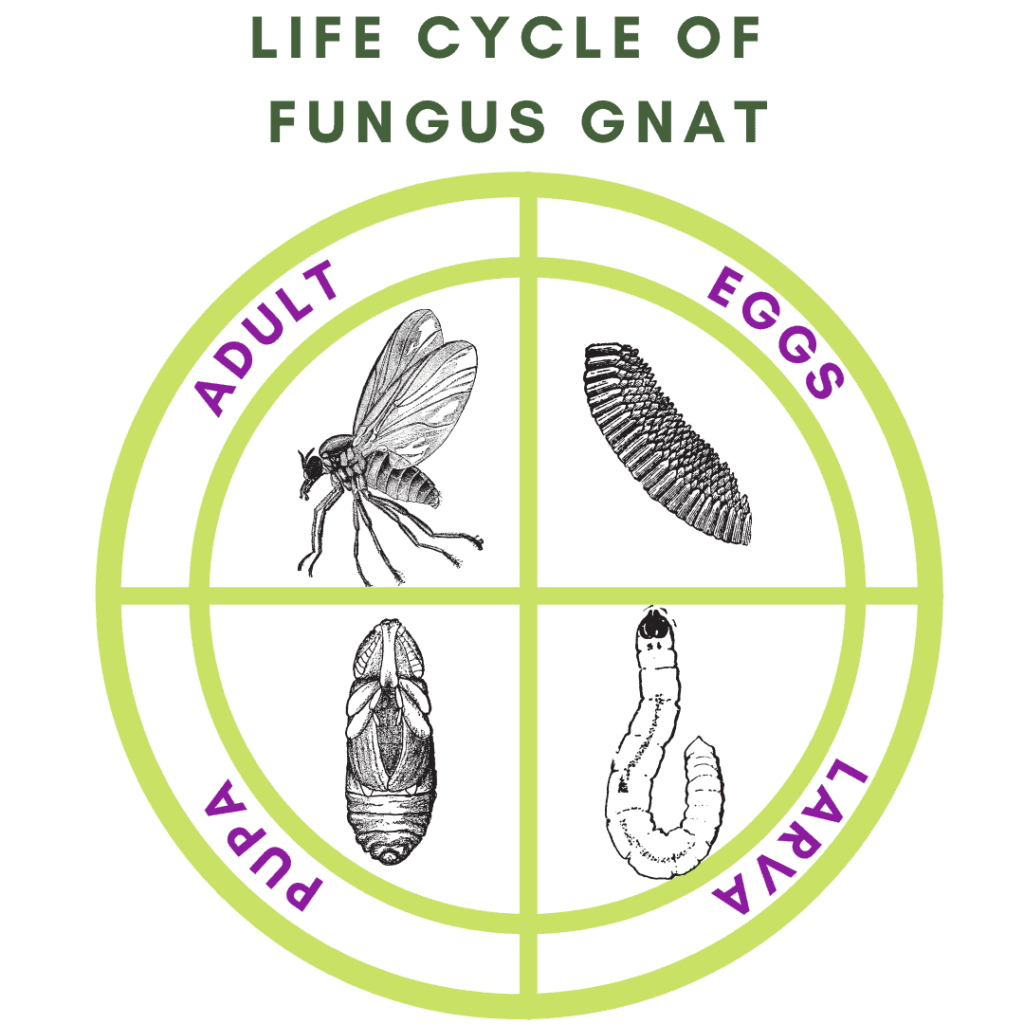
Check our video on homemade pest remedies or head over and read Fungus Gnat Fact Check and Home Remedies how to guide
Troubleshooting & Tips
- Browning leaf tips mean the environment is too dry and your Fittonia requires higher levels of humidity.
- Dull leaf colour and faded vein colour mean the plant is not receiving enough light and will benefit from being moved to a brighter location.
- If your plant is producing and dropping a lot of yellow leaves it’s likely the plant is being overwatered.
- Fittonias should be kept in a temperature range of 17°C-26°C with humidity above 55%.
- Curling leaves are the first sign of dehydration followed by dramatic wilting. These plants are robust to missing water and will quickly come back after being soaked in an undertray for a while.
Species
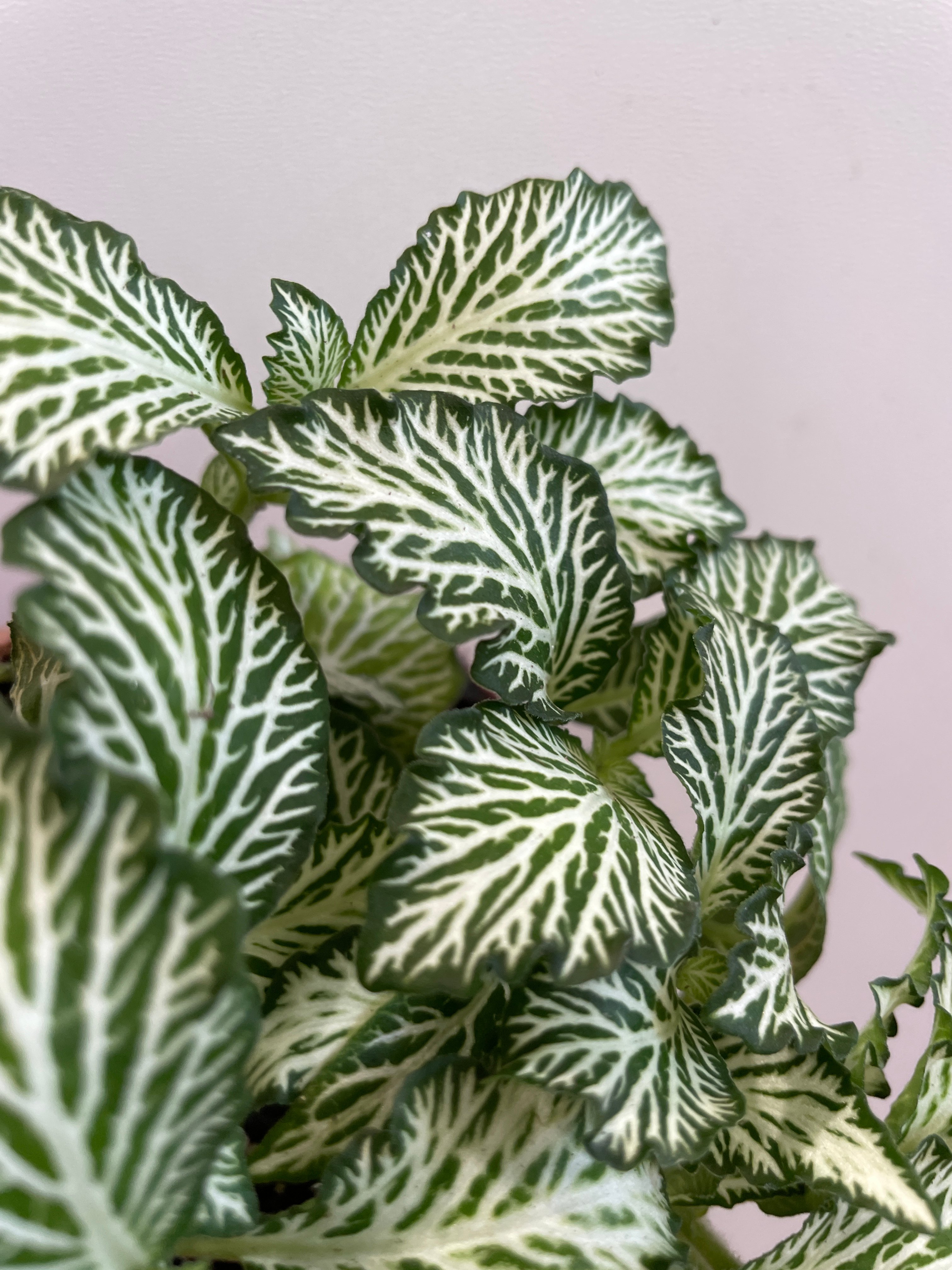
Fittonia Mosaic White Tiger
A highly popular variety of Fittonia, this gorgeous example has a more traditional colour scheme of green and white but don’t let the fool you into thinking this plant isn’t another show stopper. Its rich, slightly elongated, dark green leaves are almost fully covered in the vivid cream-white veins that really make this plant stand out and grab your attention. The patterns on the leaf formed by the veins are beautiful and help this Fittonia look wonderful whatever the location.
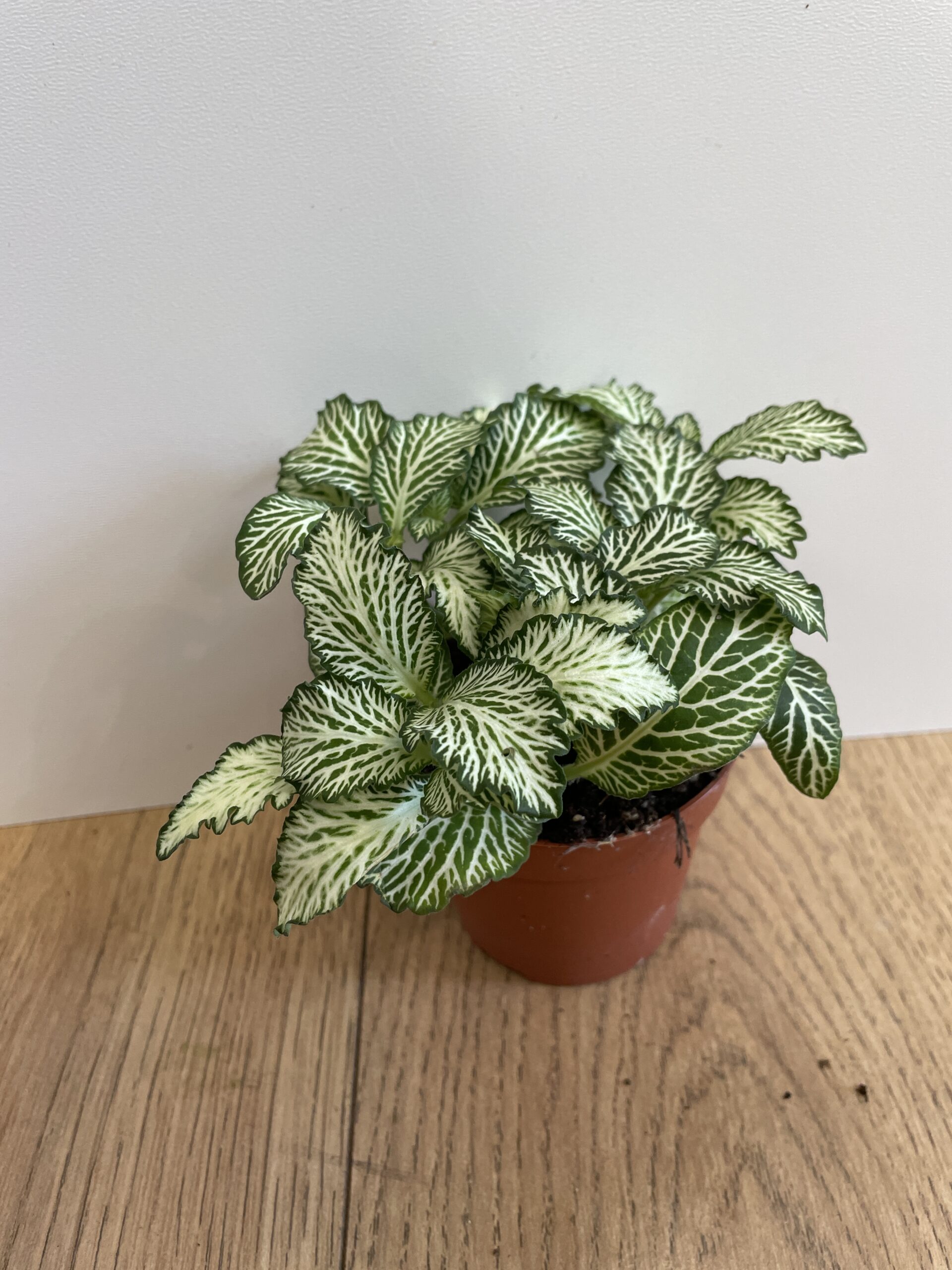
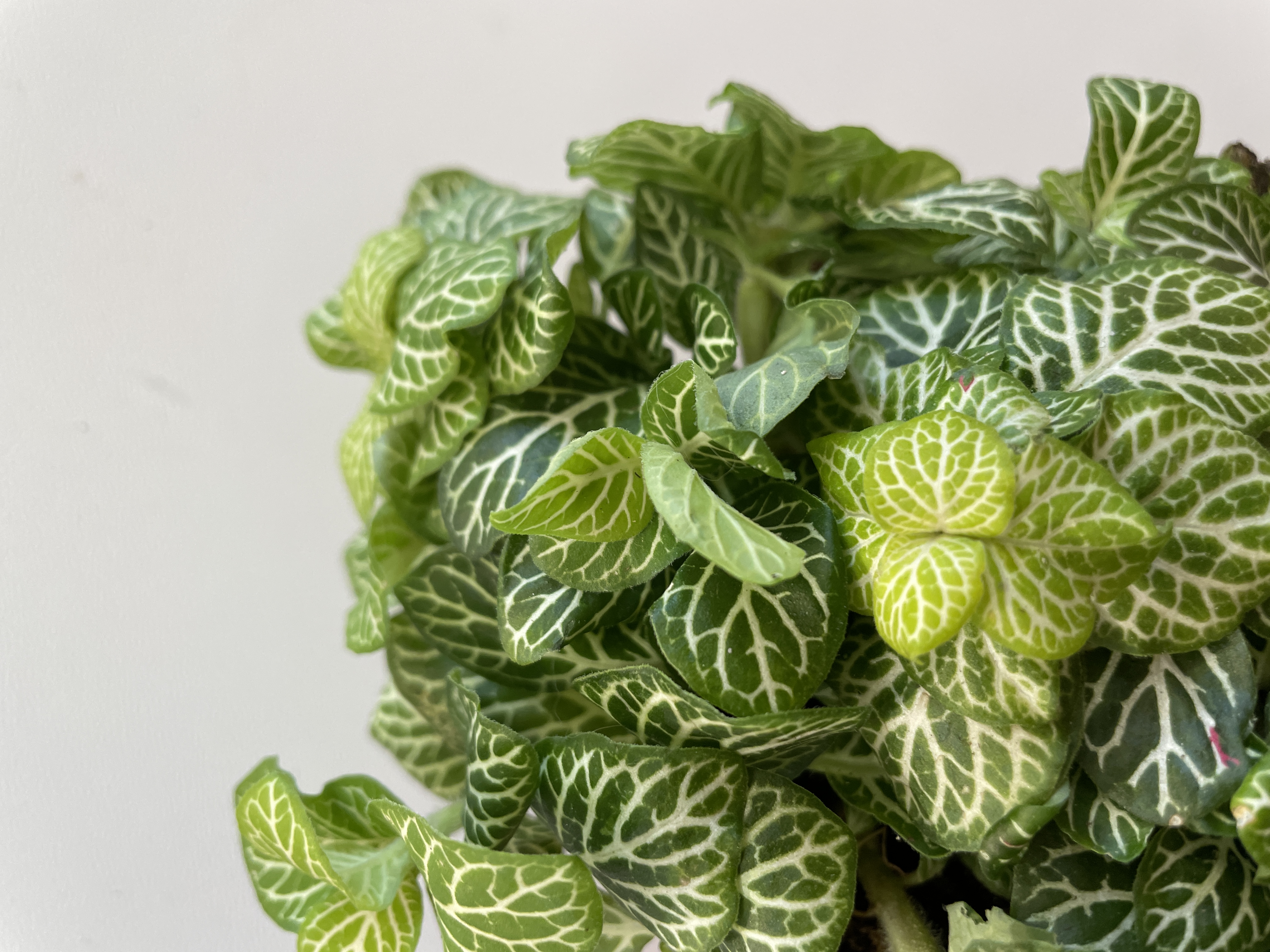
Fittonia Lemon Lime
This variety of Fittonia is a little bit more subtle and makes it perfect to fill gaps between your collection or to underplant other houseplants. Its immature leaves start out a bright lime green before turning darker to a richer jungle green. As the leaves mature to this colour the bright white veins really start to stand out and give the plant that classic Fittonia look.
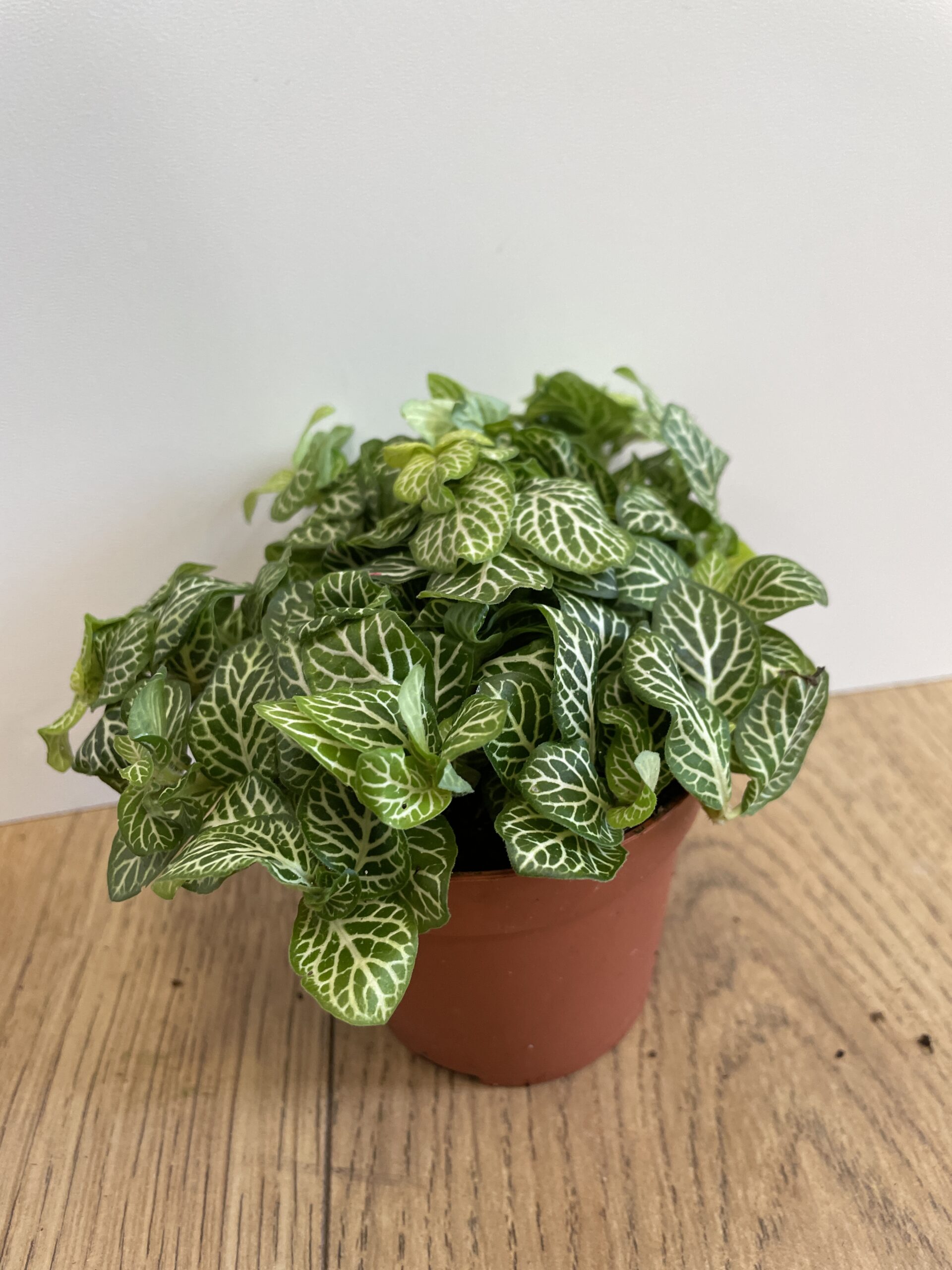
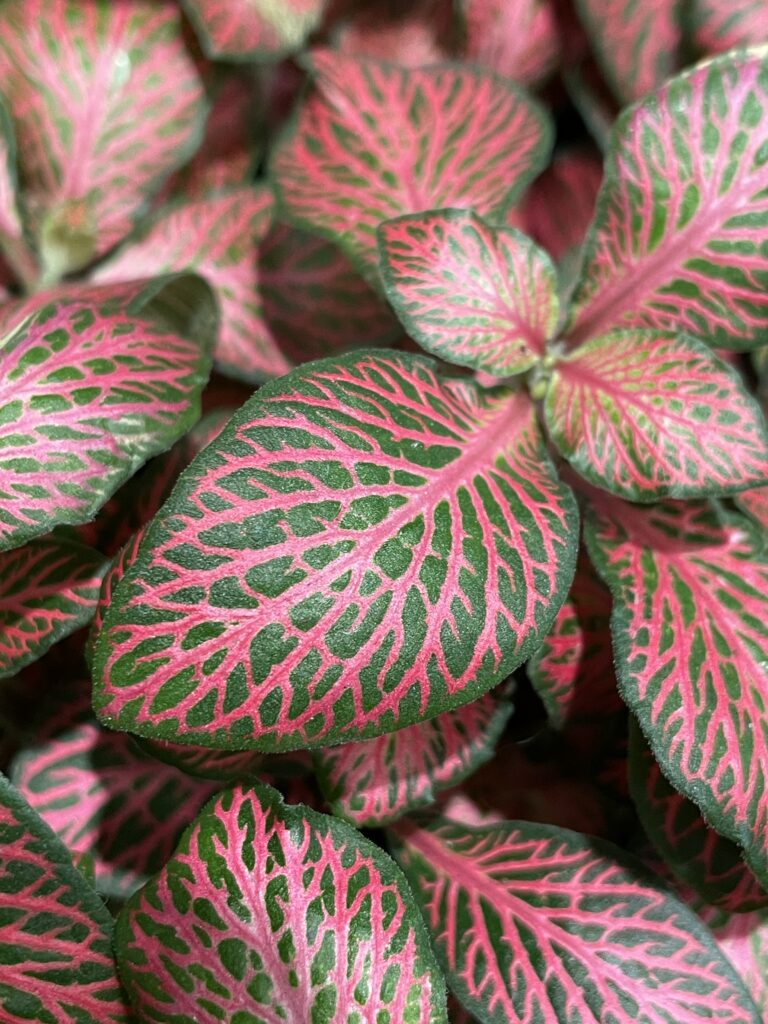
Fittonia Mosaic Red
A Fittonia with a lot of style and presence, this is a must-have for any Fittonia fan. A Compact plant that is known for the striking colour of its leaves. This tropical wonder has a rich dark green leaf that acts as a canvas for its vivid red veins. Mosaic Red are well suited for a terrarium.
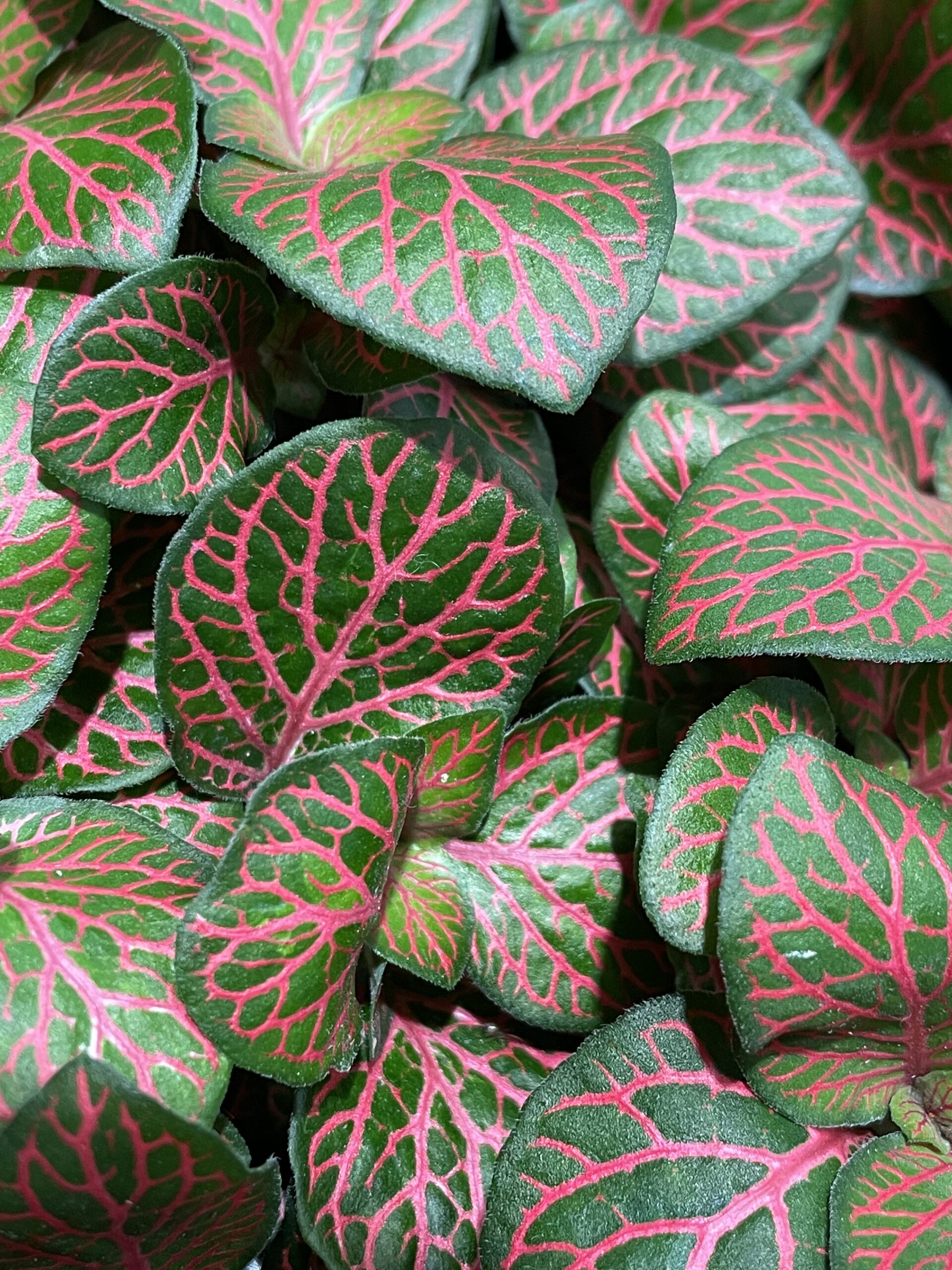
Fittonia Pink Forest Flame
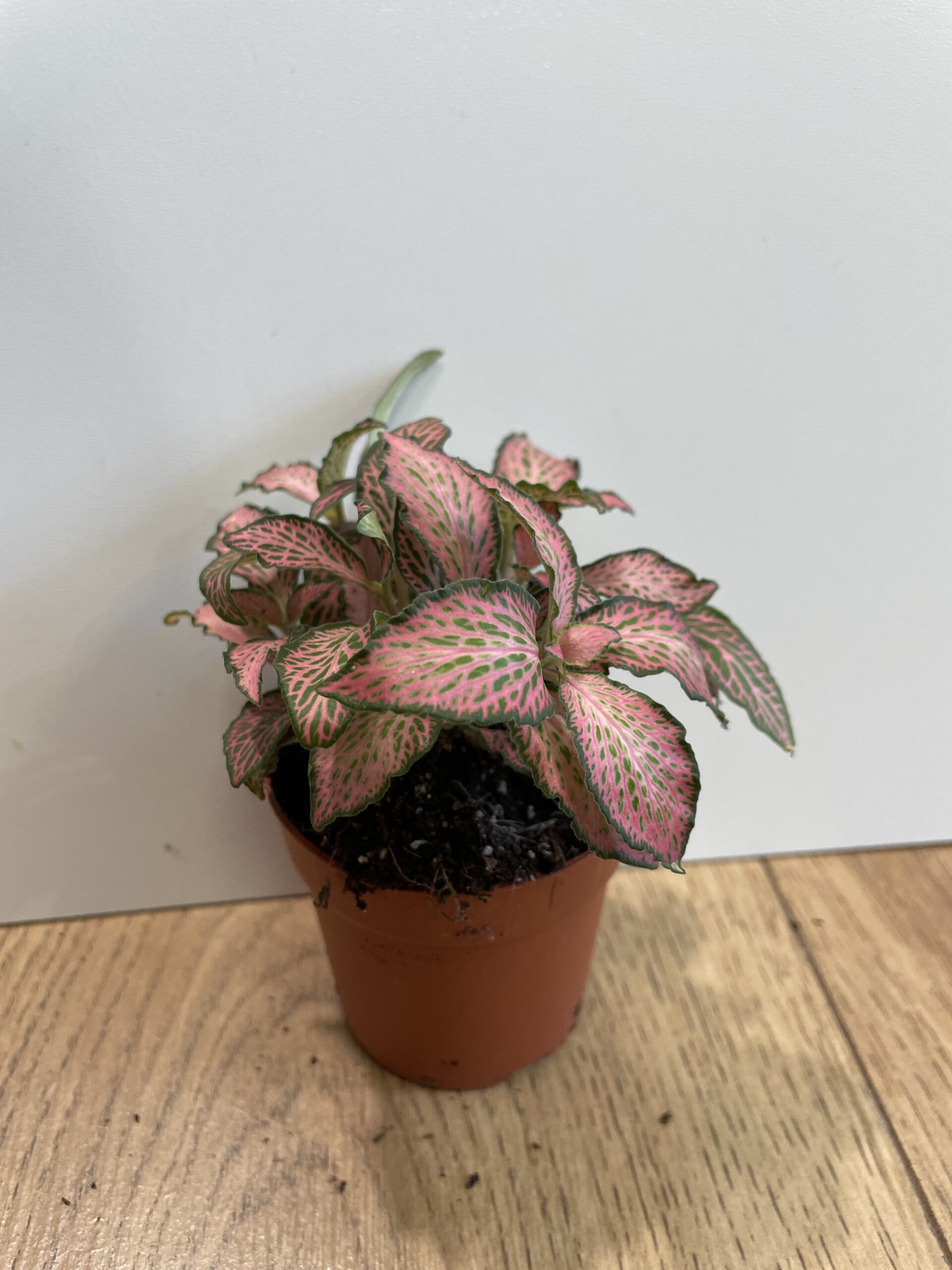
One of the most striking examples of a Fittonia, this magical plant is full of colour. Its new foliage is covered in bright, almost neon, pink veins. As the small, arrow-shaped leaves grow the colour softens as the rich dark green colour of the leaf starts to show. Another great choice to use in a terrarium.
If you enjoyed this guide head over to Articles & Blogs to learn more or check out our YouTube for even more useful information!