Skip to content
Select a published Kadence Header block

Hoya Care Guide

Home / Care Guides / Hoya Care Guide
ByCraig January 12, 2022January 23, 2026
Table of Contents
  • All About Hoya
    • Habitat
    • Species
  • Care Instructions
    • Light Conditions
    • Watering
    • Humidity
    • Pests
    • Soil
    • Toxicity
  • Troubleshooting
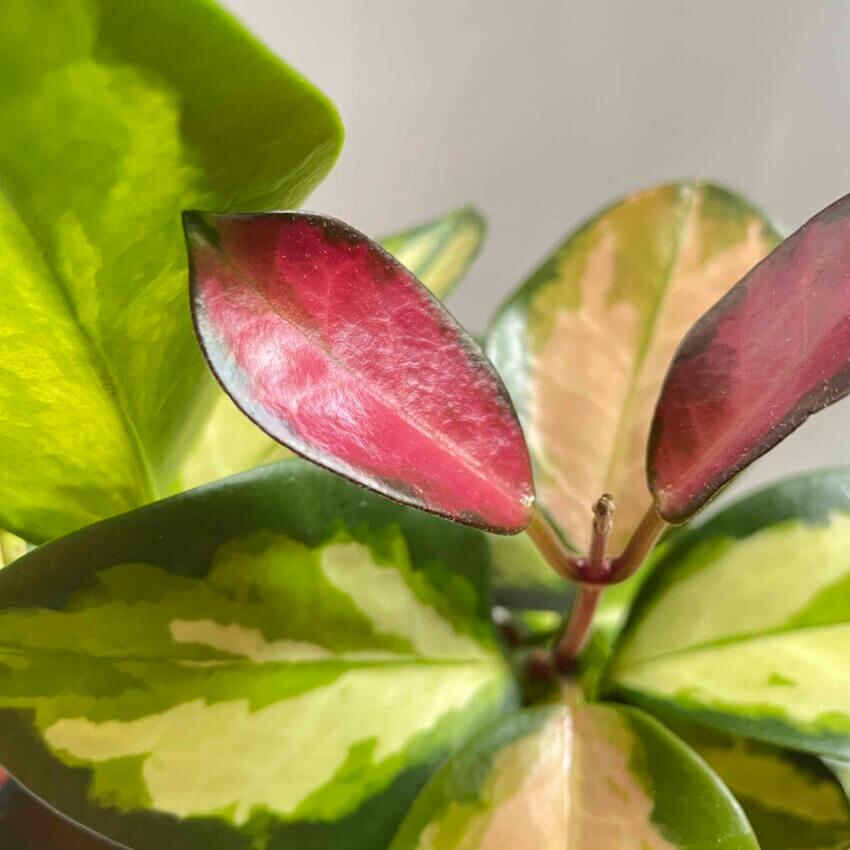
Hoya Australis ‘Lisa’

If you are eager to learn more about this genus, you can read our more in-depth guide below.

All About Hoya
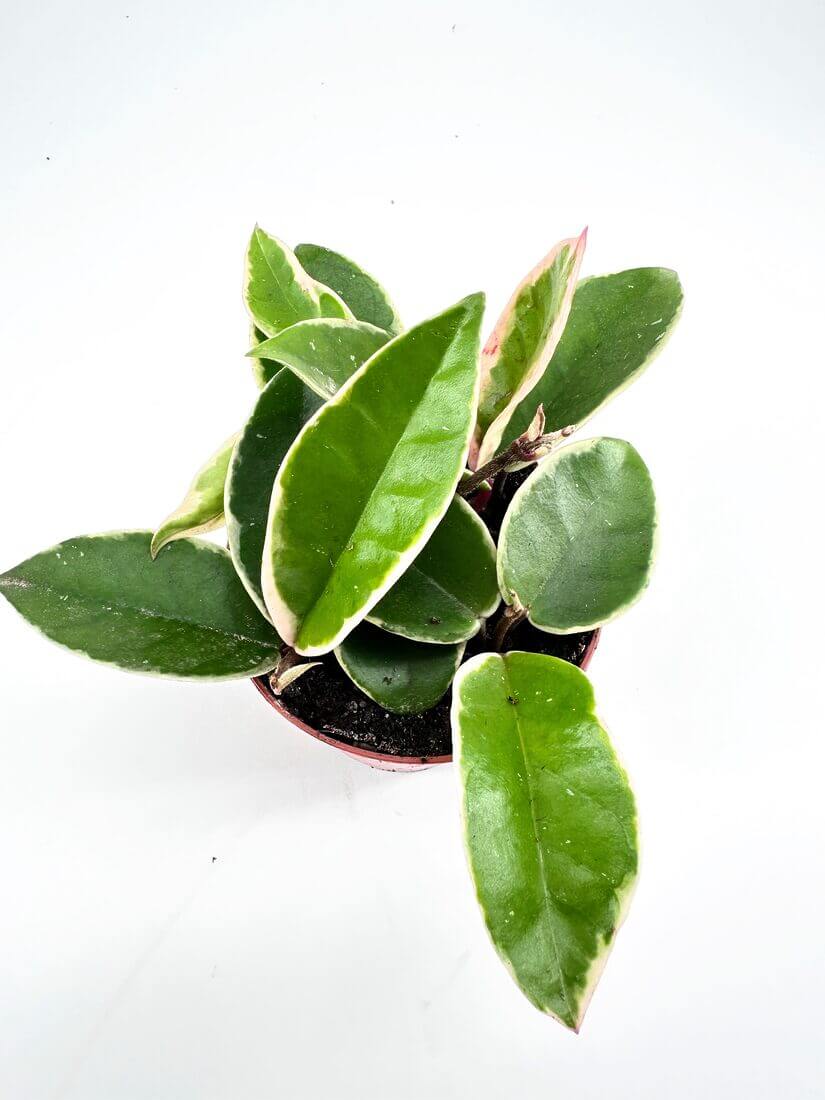
Variegated indoor plant with green, cream, and pink leaves in a terracotta pot.

Habitat

There are over 500 recognised species included in the genus Hoya (the number varies greatly due to discrepancy within the group and new species being discovered).  Most Hoya plants are originary from Asia, Australasia and the Pacific islands. The Hoya genus was named by botanist Robert Brown, after his also botanist friend, Thomas Hoy.

Hoya species are found in rainforest, coastal and cliff habitats, where they may grow climbing on other plants (this pattern is also known as epiphytic), forming vines, and occasionally, shrubs.

Species

Given the large number of species included in this genus, attempting to gather a complete list of them would be a nearly impossible task in a brief article section.

Hoya leaves are succulent and vary greatly in length and shape.  They can range from round as in our Hoya australis lisa, lanceolate as in Hoya bella or even heart shaped as in Hoya kerri.

Care Instructions

Hoya requires minimal maintenance, which makes them ideal for beginner indoor plant collectors. They are slow growers and have stunning blooms if you provide adequate growing conditions to your plant.
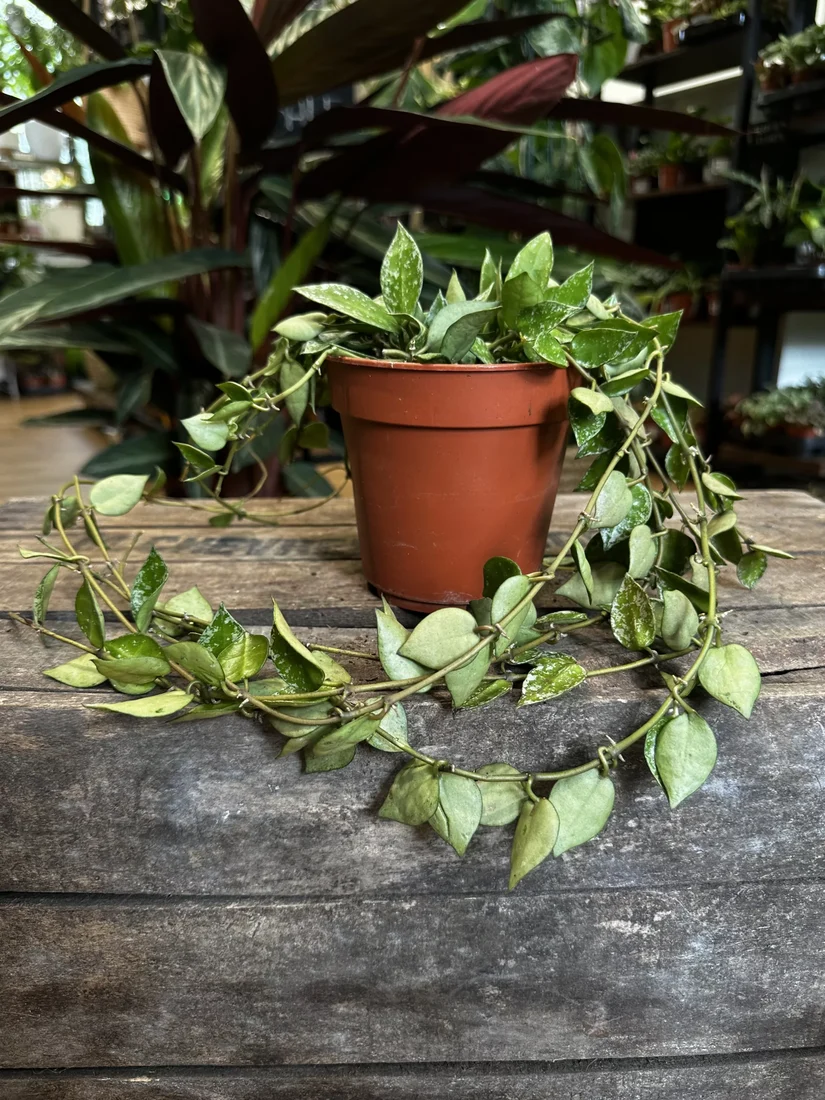
Hoya Krohniana ‘Silver Splash’

Light Conditions

Hoya growing pattern makes them adapted to receive dappled or diffuse light that gets filtered by the plants they use to support themselves. This means that very bright direct sun light will burn the foliage of your plant.

That being said, certain species can tolerate more direct sun light and will change their colour (this is known as sunstressing). This should be performed with caution as too much sunlight damages the chlorophyll in your plant, affecting its metabolism.

Use the slider on the picture to see one of our Hoya Sunrises before and after undergoing sunstressing.

  • Before ‘sun stressing’
  • After ‘sun stressing’

Watering

Water when most of the soil is fairly dry, but not bone dry. The thicker, succulent-like foliage retains water and you might notice wrinkling of the leaves when the plant is very thirsty.

The frequency of watering will depend on your house conditions and your soil mix. In general, you will notice that your Hoya will not need as much water in winter.

Humidity

Most Hoyas will be satisfied with humidity levels around 50%. Some species might need slightly higher levels around 60-70%, but overall your Hoya will be happy with your normal household humidity.

Pests

Hoyas are slightly susceptible to mealybug, glasshouse whitefly and scale insect (pests that feed on the sap of the plant). You can find information about prevention and treatment in our pest guide here.

Soil

Hoya prefers to be on the rootbound side in a nicely airy mix. If the soil is highly moisture retentive, your plant will eventually develop root rot and die. Therefore, make sure you add plenty amendments to your soil as orchid bark and perlite to allow good drainage and oxygen access to the roots.

Toxicity

Hoya plants are non-toxic to people and animals.

Troubleshooting

There might be two different issues here. The likely cause is insufficient light, and moving the plant towards a brighter spot should improve its appearance.

Hoya will grow long stems – do not cut them! The new leaves will grow from the distal end of said stem. Most Hoya species are climbers, and your plant might be developing long vines trying to find something to latch on to. Offering a trellis might reduce the space in between leaves in this case.

Is the soil dry or wet?

Go ahead and feel the soil of your plant. If it is dust dry, your Hoya roots might be damaged due to the lack of moisture.

If conversely, the soil is wet the issue is overwatering (and Hoya’s are very susceptible to root rot). Overwatering can be due to high frequency of watering or inadequate soil mix with lack of drainage. Make sure your pot has a drainage hole and check the roots looking to spot rot.

Check your plant very thoroughly looking to spot pests like aphids or mealy bugs. Clean your Hoya and refer to our wee guide as per how to deal with undesired guests (pests).

If you enjoyed this guide head over to Articles & Blogs to learn more or check out our YouTube for even more useful information!

Recent Posts

  • Transform Your UK Garden: The Best Moss for Japanese Style
  • Springtails: Tiny Clean-Up Crew for Terrariums & Soil
  • Moss Care Guide
  • What Is a Mini Terrarium? Your Step-by-Step Mini Terrarium Kit Guide
  • Our Show Garden Moss Guide Is Here

Categories

  • Albuca
  • Bonsai
  • Care Guides
  • Carnivorous
  • Ferns
  • Gift Guide
  • Growing Medium
  • Houseplant Pests
  • How To Guides
  • Light
  • Marimo Moss
  • Monstera
  • Moss
  • New Plant Care
  • Pet Friendly
  • Philodendron
  • Plant Care
  • Plant Hospital
  • Plant Maintenance
  • Plant Pest
  • Pothos
  • Projects
  • Propagation
  • Recommendations
  • Repotting
  • Repotting
  • Roots Rot
  • Selaginella
  • Special Offers
  • Spring Plant Care
  • Succulents
  • Terrarium
  • Terrarium
  • Terrarium Care
  • Top 10s
  • Turtle Vine
  • Videos
  • Wellness
  • Winter Care
  • Workshops and Events

Archives

  • May 2026
  • April 2026
  • February 2026
  • January 2026
  • November 2025
  • July 2025
  • June 2025
  • May 2025
  • April 2025
  • March 2025
  • February 2025
  • January 2025
  • November 2024
  • October 2024
  • September 2024
  • August 2024
  • July 2024
  • June 2024
  • May 2024
  • March 2024
  • February 2024
  • January 2024
  • December 2023
  • November 2023
  • October 2023
  • September 2023
  • August 2023
  • July 2023
  • May 2023
  • April 2023
  • March 2023
  • February 2023
  • January 2023
  • October 2022
  • April 2022
  • March 2022
  • October 2021

Recent reviews

  • Saxifraga Stolonifera Strawberry Begonia 6cm Saxifraga Stolonifera Strawberry Begonia 6cm
    Rated 5 out of 5
    by Ausrine K.
  • Dicranum Mood Moss Mood Moss | Broom Fork Moss | Cushion | Dicranum Scoparium
    Rated 5 out of 5
    by Richard Allan
  • Springtails Collembola For Bio-Active Terrarium Vivarium Springtails Collembola For Bio-Active Terrarium Vivarium
    Rated 5 out of 5
    by Richard Allan
  • Springtails Collembola For Bio-Active Terrarium Vivarium Springtails Collembola For Bio-Active Terrarium Vivarium
    Rated 5 out of 5
    by Matthew

Follow us for plant inspiration, tips & behind-the-scenes!

See our opening times and get directions to our Aberdeen shop – we always love a local review too!

Find us on Google Business

[cusrev_trustbadge type=”SLP” border=”no” color=”#DACEC2″]

Useful Links

Resources

  • Plant Tips
    • Articles & Blog
    • Care Guides
    • Discover Moss
    • Plant Hospital
  • Info
    • About Us
    • All our reviews
    • How to earn rewards
    • In Store Services
    • FAQs
  • Workshops and services
    • Workshops
    • Repotting Service
  • Business and Bulk Sales
  • Contact Us
  • Register or Login to Your Account

Plants

  • Houseplants
  • Bonsai
  • Pet Friendly
  • Succulents & Cacti
  • Surprise Mystery Plant Box
  • Terrarium Plants

Moss

  • Moss Poles
  • Marimo Moss
  • Live Mosses
    • Sphagnum Moss
    • Reindeer Moss
    • Feather Mosses
    • Cushion Mosses
    • Carpet Mosses
    • Fresh Moss
  • Tree Fern Panels
  • Preserved Moss

More

  • Gift Card
  • Terrariums & Mossariums
  • Soil
  • Kits
  • Pest Treatment
  • Refund and Returns Policy
  • Terms and Conditions
  • Cookie Policy (UK)
  • Privacy Policy
  • Shop Coupon Terms

© 2025 Highland Moss Ltd, 61 Constitution Street, Aberdeen, AB24 5ET.

Registered Company Number SC717578 

VAT No. GB426029218

Scroll to top